


TLDR
- Fake reviews undermine consumer trust, which means it’s critical to verify authenticity throughout the review collection process.
- Patterns reveal potential manipulation. Unusual customer data, response rates, review activity, and consumer reports can signal concerns, but a single red flag doesn’t necessarily prove fraud.
- Human expertise and context matter. Drawing on more than 20 years in the field, SmartCustomer combines industry expertise, technology, and human investigation to protect consumers and treat honest businesses fairly.
Fake reviews come at a steep cost to consumers. By 2030, fake reviews are projected to cost online consumers $1.07 trillion in misinformed purchases. When shoppers can't tell a genuine review from a manufactured one, they lose one of the most useful tools they have for deciding where to spend their money.
Drawing on 20 years of experience in the field, we’ve learned that identifying fake reviews takes more than flagging suspicious content after it's published.
And not every customer review begins the same way.
Some customers write reviews unprompted because they want to share an exceptional experience or warn others about a poor one. These organic, unsolicited reviews are important because they reflect the experiences of customers who chose to speak up without being asked. On SmartCustomer, we label these as “No Invitation” reviews.
Other reviews are collected through invitations, or review requests made by the business through review management tools. Proactively collected feedback (invited reviews) aren’t necessarily more or less trustworthy than unsolicited ones. Both can provide valuable insights when they reflect genuine customer experiences.
Ultimately, what matters most is whether a review comes from a real customer and accurately reflects their experience.
To understand how we detect fake reviews, it helps to first explore how businesses collect feedback and what goes into verifying that those reviews reflect real customer experiences.
In this article, we’ll focus on invited reviews and examine how SmartCustomer monitors business review collection over time. However, the same commitment to authenticity applies to every review, regardless of how it reaches the platform.
How Review Invitation Campaigns Begin
When most people think about fake reviews, they picture someone creating a fake account to post a glowing five-star recommendation for themselves or writing a damaging review about a competitor. While those situations certainly happen, many attempts to manipulate online reviews begin much earlier, before a review has ever been written.
Every solicited review begins with a customer transaction. Businesses collect reviews in a variety of ways, depending on how they interact with their customers. Some of the most common methods include sending feedback links directly to customers after providing a product or service. They might upload completed customer transactions using a bulk upload tool, or automate review requests based on order confirmation or fulfillment triggers. Service-based, product-based, ecommerce, local, or other types of businesses may utilize different methods based on their customer journey. Read more about SmartCustomer’s review collection process here.
Although these collection methods differ, they all share a common goal of providing real customers an opportunity to share honest feedback about their experience.
By the time a review appears online, a consumer may have forgotten all about the invitation that prompted it. For a review platform, however, the collection process is an important part of maintaining review integrity.
The overwhelming majority of review campaigns are entirely legitimate. Businesses invite real customers to share honest feedback, and customers decide whether or not they want to participate. The goal of monitoring how reviews are collected is to identify patterns that warrant a closer look to ensure legitimacy.
Monitoring the Review Collection Process
Most review campaigns follow predictable patterns, with real customers responding to invitations in different ways. Some leave a review within minutes of receiving an invitation, while others wait several days. Many intend to write a review but never get around to it, and some choose not to leave feedback at all. This variation is what we’d expect to see.
Sometimes, a review campaign shows patterns that differ enough from typical customer behavior to prompt our team to take a closer look.
Standing out doesn't always mean something is wrong. A single unusual pattern rarely points to fraud on its own. When several appear together, SmartCustomer looks at the full picture to understand what's driving the activity, rather than assuming wrongdoing.
The following sections cover a few of the most common patterns that stand out enough to warrant a closer look.
When Customer Data Raises Questions
Every review invitation starts with a customer transaction. As covered earlier, businesses share that information with SmartCustomer in different ways. SmartCustomer processes that information as a service provider to send out review invitations on the business's behalf, while helping teams comply with privacy laws such as the California Consumer Privacy Act (CCPA) and General Data Protection Regulation (GDPR). Whichever method a business uses, the transaction data behind its invitations is one factor our moderation team considers.
Occasionally, that data looks unusual. SmartCustomer may notice patterns that appear inconsistent with legitimate customer activity, such as highly repetitive email naming conventions or unusually consistent formatting across large batches of customer records.
None of these observations automatically indicate misconduct. In some cases, there may be a perfectly reasonable explanation. For example, a business may have standardized its customer database or completed a large migration project.
Rather than drawing immediate conclusions, our moderation team treats these observations as one piece of a much larger puzzle. If additional concerns emerge later in the review campaign, those earlier observations provide valuable context during an investigation. Analyzing customer data in isolation rarely tells the full story. Analyzing it alongside other evidence, such as review activity and customer reports, provides a more accurate and comprehensive explanation.
Real Case
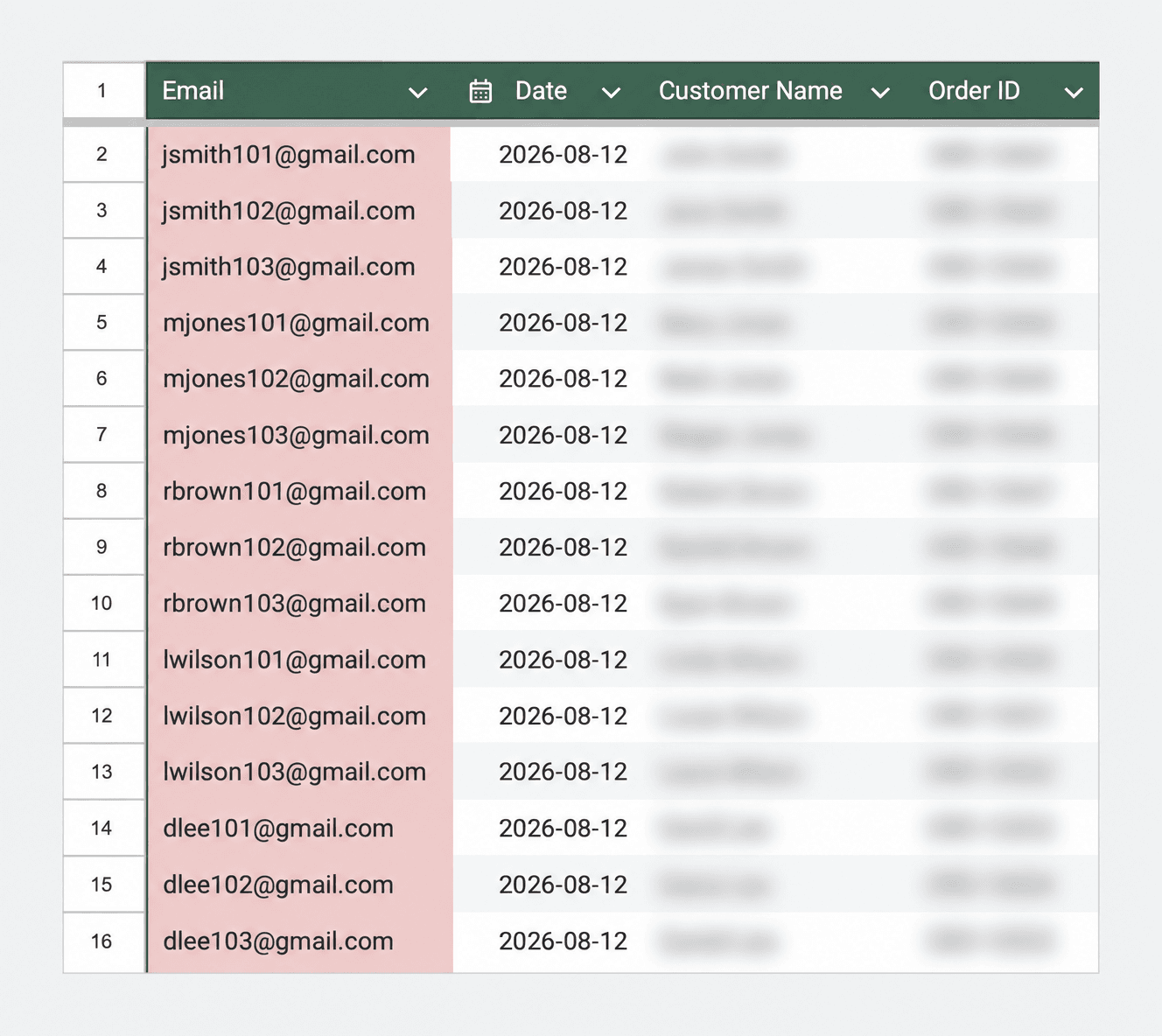 Mock data for illustration purposes. Data used are fictional.
Why Response Rates Matter
Review platforms can’t identify fake reviews simply by analyzing response rates. Every business has a unique customer base and relationship with its audience. Some companies naturally achieve higher response rates for various reasons, such as outstanding customer service or highly effective review request strategies.
In and of itself, a high response rate isn’t necessarily a red flag. However, moderation teams might take a closer look when a review campaign produces patterns that don’t align with the way real customers typically engage with review requests.
Think about your own inbox. How many emails do you receive every day and how many of those do you actually open? How many do you intend to respond to but never do? Review invitations are no different. Even highly satisfied customers don’t all leave reviews, which is why legitimate review campaigns naturally produce a range of participation rates.
An unusually high response rate may prompt SmartCustomer to look more closely, but it doesn’t tell us why that activity occurred. That's where the broader context becomes essential.
Real Case
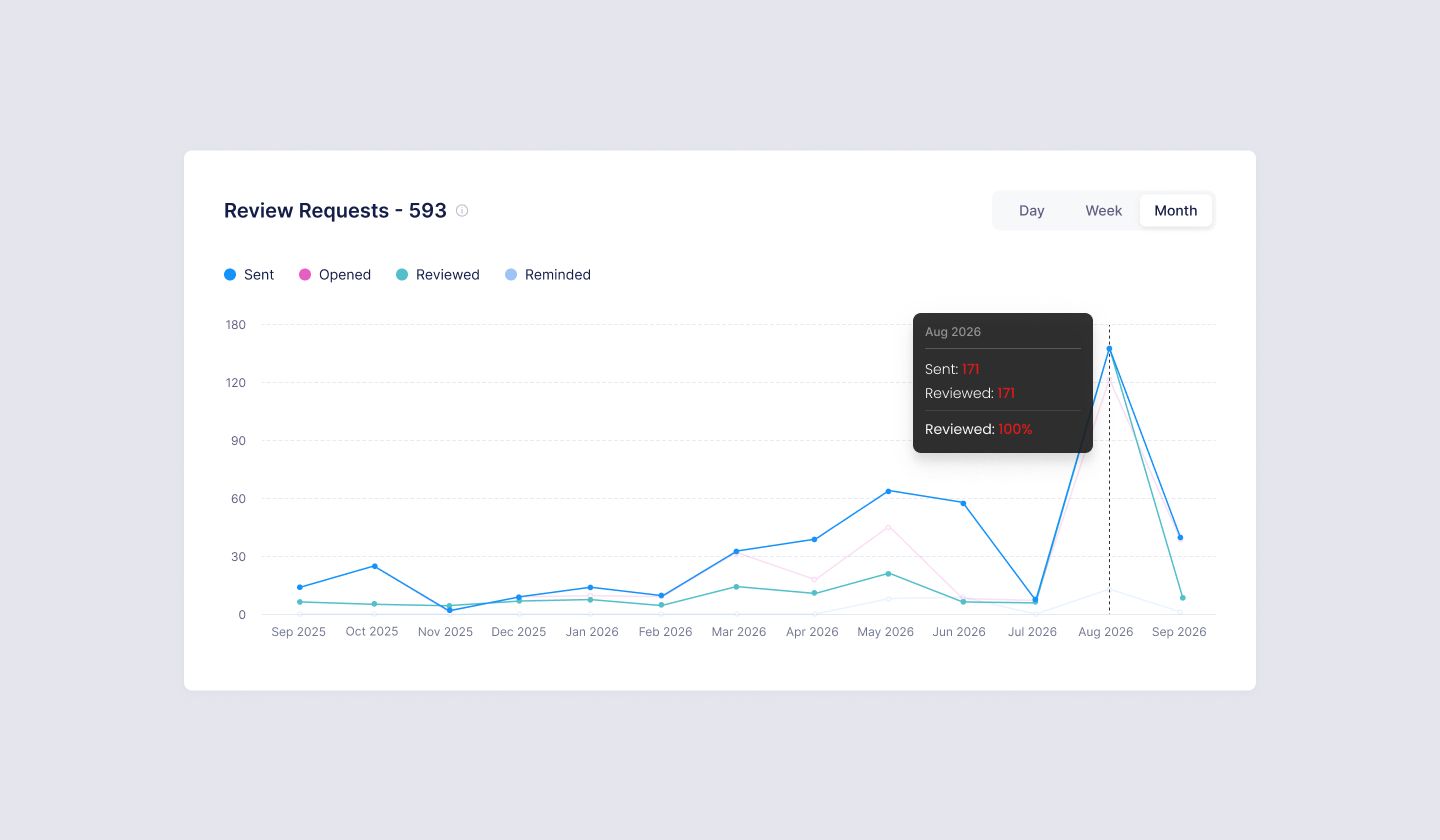
Mock data for illustration purposes. Data used are fictional.
Why Context Matters
At SmartCustomer, moderation decisions aren’t based on a single warning sign or isolated data point. As discussed above, an unusually high response rate doesn’t automatically indicate misconduct. Neither does a customer upload that looks different from previous campaigns. Even consumer reports, while incredibly valuable, don’t always capture the full picture.
Every review campaign tells a different story and understanding that story requires context. A business may have recently migrated to a new ecommerce platform, resulting in a large customer upload. Another may experience a seasonal surge that dramatically changes its review activity for several weeks. Others may launch a new product that generates unusually high customer engagement and, naturally, more reviews.
Each of these situations might look unusual but are entirely legitimate, which is why SmartCustomer’s moderation team evaluates multiple sources of information before determining whether additional investigation is necessary. Depending on the circumstances, we may consider review activity over time, consumer and business reports, review collection methods, supporting documentation, communications between the parties, or request additional documentation from the business.
You can review our complete list of fake review red flags to learn more about see what else we track. Looking at these factors collectively helps us determine whether unusual activity reflects a legitimate brand event or something that requires further review.
Our goal is to determine whether the reviews accurately represent genuine customer experiences while ensuring honest businesses are treated fairly throughout the process.
Inside a Moderation Investigation
Technology helps identify unusual activity, but it doesn't make the final call. Data alone rarely tells the whole story, so at SmartCustomer, a human expert personally investigates every single case.
Ultimately, every investigation is designed to answer the same question: Do these reviews accurately reflect genuine customer experiences?
Many investigations don’t result in further action. However, when multiple pieces of information point toward review manipulation or review collection practices that violate our policies, appropriate measures are taken. This can range from removing reviews that don't comply with our guidelines or rejecting review campaigns that can’t be verified. It might also involve taking action against a business account when necessary to protect the integrity of our platform.
Protecting Honest Businesses
Review moderation doesn’t just serve to identify businesses that violate review policies. It also protects honest businesses from fake reviews or even cases like review bombing.
Most businesses using SmartCustomer simply want to collect feedback from real customers. They invest time in providing good service and products and encouraging customers to share honest experiences about them. Those businesses deserve to know that their review campaigns will be evaluated fairly if questions ever arise.
For these reasons, moderation isn't based on assumptions or isolated data points. Before SmartCustomer draws any conclusions, every investigation considers the available evidence and context and gives the business an opportunity to explain unusual activity.
A thoughtful, fair moderation process benefits everyone and builds trust for both consumers and businesses. Consumers gain greater confidence that reviews reflect authentic experiences and businesses know they’re being evaluated using consistent, rigorous standards.
Why This Matters to You
Many consumers don’t consider everything that happens before a review appears online. Consumers who are researching a business and deciding where to spend their money are often focused on reading reviews and comparing ratings. The systems that help maintain review integrity operate quietly behind the scenes, which is precisely how they should work.
Every published review represents a chain of trust. It begins with a genuine customer, followed by a legitimate transaction, an authentic review invitation, an honest opinion, and a thoughtful moderation process designed to preserve the integrity of that experience. When any link in that chain is compromised, consumers lose confidence in online reviews.
Protecting review integrity means protecting every step in that process, not just the final review that appears on a business profile. That requires more than sophisticated technology or automated detection systems. It requires experienced people who understand that every review campaign has a story, and that story can only be understood by considering the complete picture.
Because consumers and businesses deserve a fair, rigorous system that helps ensure only authentic reviews are posted, SmartCustomer actively works to protect review integrity.