


Key findings
- 51% stopped buying from a company because of its political stance in the past 12 months, up from 30% in 2024.
- A majority of shoppers (67%) say a company’s politics influences what they buy, while the share who say it matters little or not at all fell from 62% in 2024 to 33%.
- Leading up to the November midterms, nearly four in ten shoppers (39%) say they intend to make a more conscious effort to align their spending with their political beliefs.
- Almost two-thirds (64%) would pay more for a product from a company whose political beliefs match their own.
- 53% want companies to be more transparent about their political positions, and the share who want them kept private fell from 41% in 2024 to 22%.
- Six in ten (60%) say a business’s political affiliation would matter more to their purchases if they could easily see it while shopping.
- About a third (35%) say that if a company disclosed its political donations, their trust would depend on who received the money.
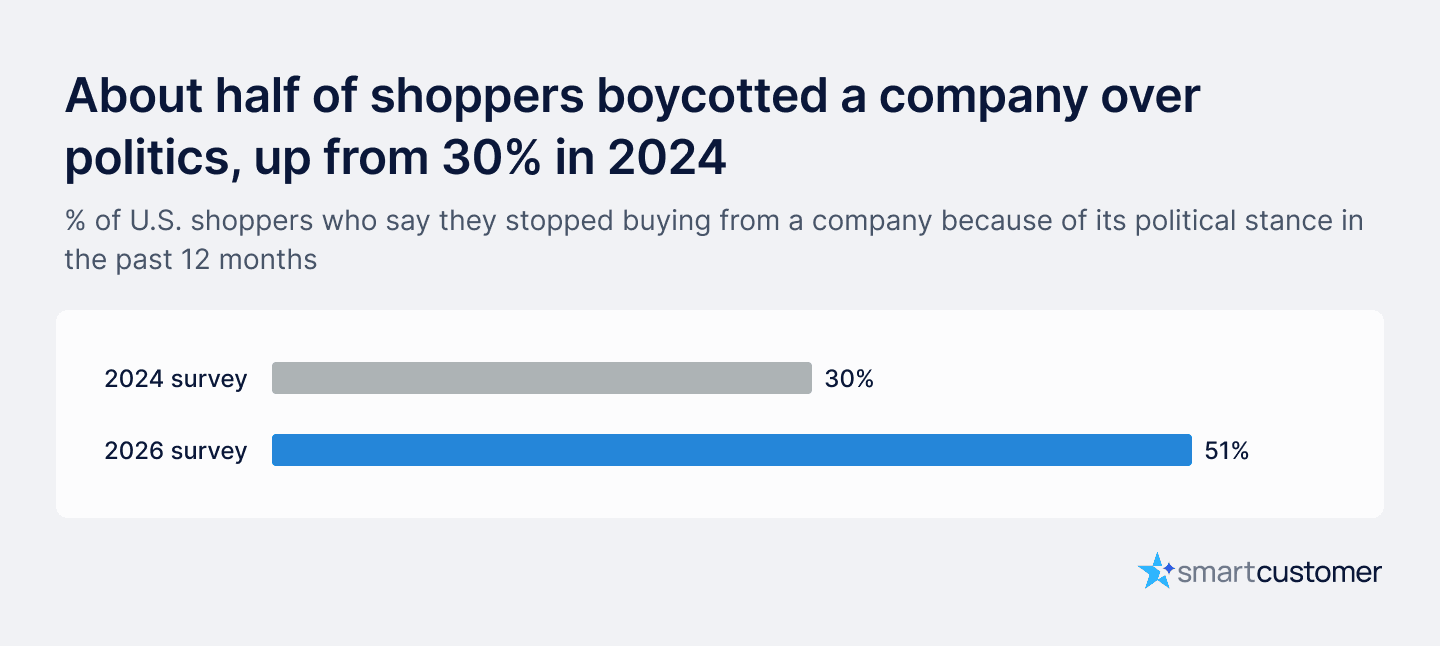
Politics now influences where many U.S. shoppers spend their money. In the past 12 months, about half (51%) of the shoppers we surveyed stopped buying from a company because of its political stance. When we asked the same question in the presidential election year 2024, less than a third (30%) did so.
We ran this survey with Goods Unite Us, a platform that shows shoppers the political donations of the companies they buy from. On October 7, 2026, about four weeks before the midterm elections, we surveyed 1,115 U.S. shoppers to analyze how political views affect purchases and what shoppers expect from the companies they choose to support. The analysis revealed the following ten key findings.
1. More shoppers say politics influence what they buy
Shoppers rated how much a company’s political affiliation influences their purchasing decisions on a scale from 1 (not at all) to 5 (a great deal). In 2026, two-thirds (67%) of shoppers reported that influence as significant, rating it a 3 to a 5.
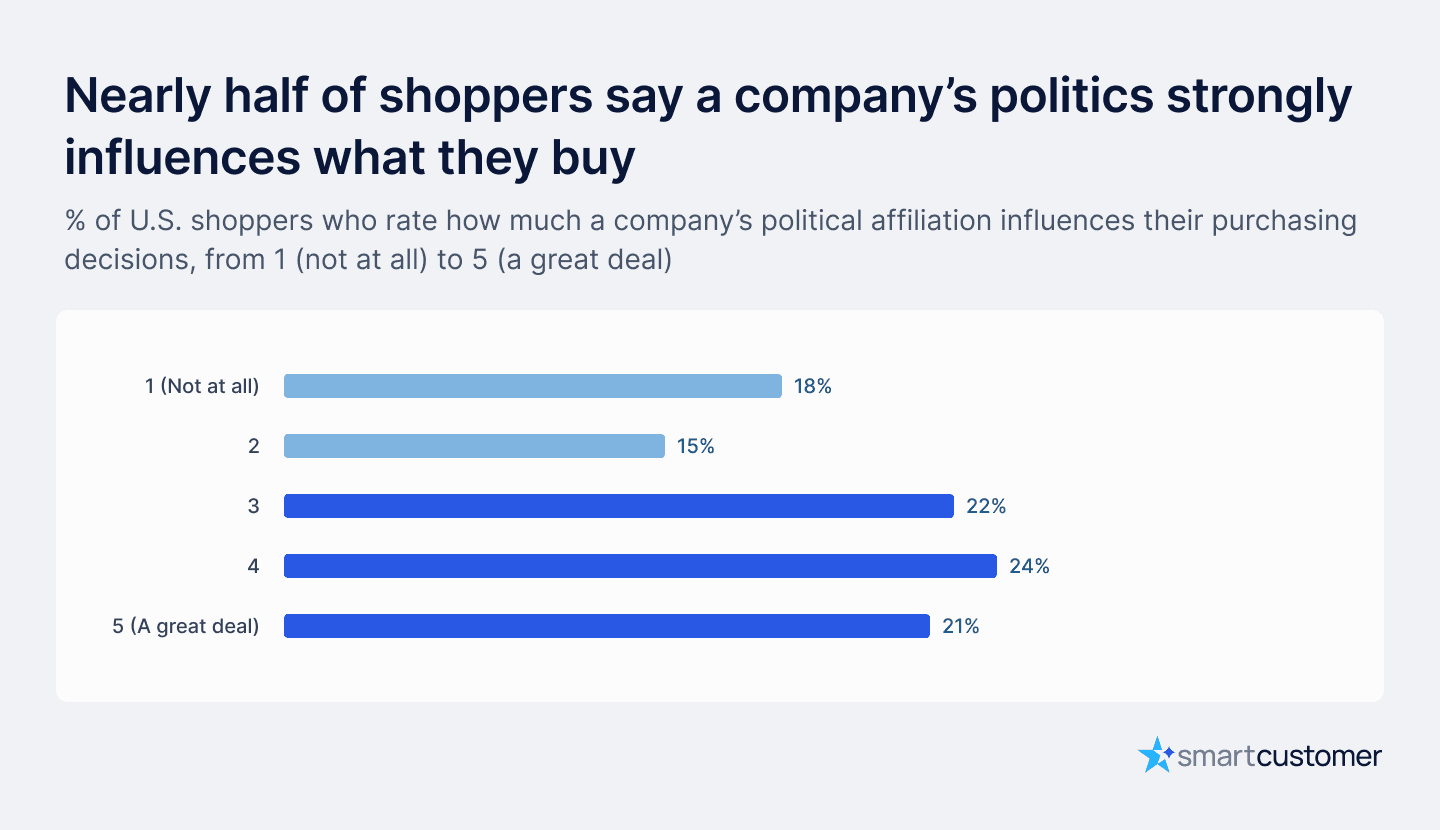

This finding is in sharp contrast in 2024. Nearly two-thirds (62%) of shoppers rated it a 1 or a 2, meaning it mattered very little or not at all, compared to about a third (33%) in 2026. And the share choosing “not at all” decreased from 32% in 2024 to 18% in 2026.
2. Shoppers are increasingly boycotting companies over politics, and rewarding the ones they agree with
In the days leading up to the 2026 midterm, about half (51%) of shoppers said they’d boycotted a company in the past 12 months because of its political stance. This represents a 21% increase in percentage points since 2024, the last presidential election year, when only three in ten shoppers (30%) said they’d boycotted a brand.
“A lot has changed in the two years since we last asked this question,” said Michael Lai, CEO of SmartCustomer. “More people now see their wallet as one of the most direct ways to make an impact, and they’re deciding where to spend based on what a company stands for.”
Shoppers’ political stances are also influencing whether they actively buy from a business. In the past 12 months, nearly half (47%) of shoppers bought from a company to support its political stance. Additionally, a large majority (83%) of those same shoppers boycotted a company over politics.
3. Shoppers want more political transparency, with conditions
When asked whether companies should be more transparent about their political affiliations or stances as the midterms approach, about half (53%) of shoppers said companies should be more open about their political positions.
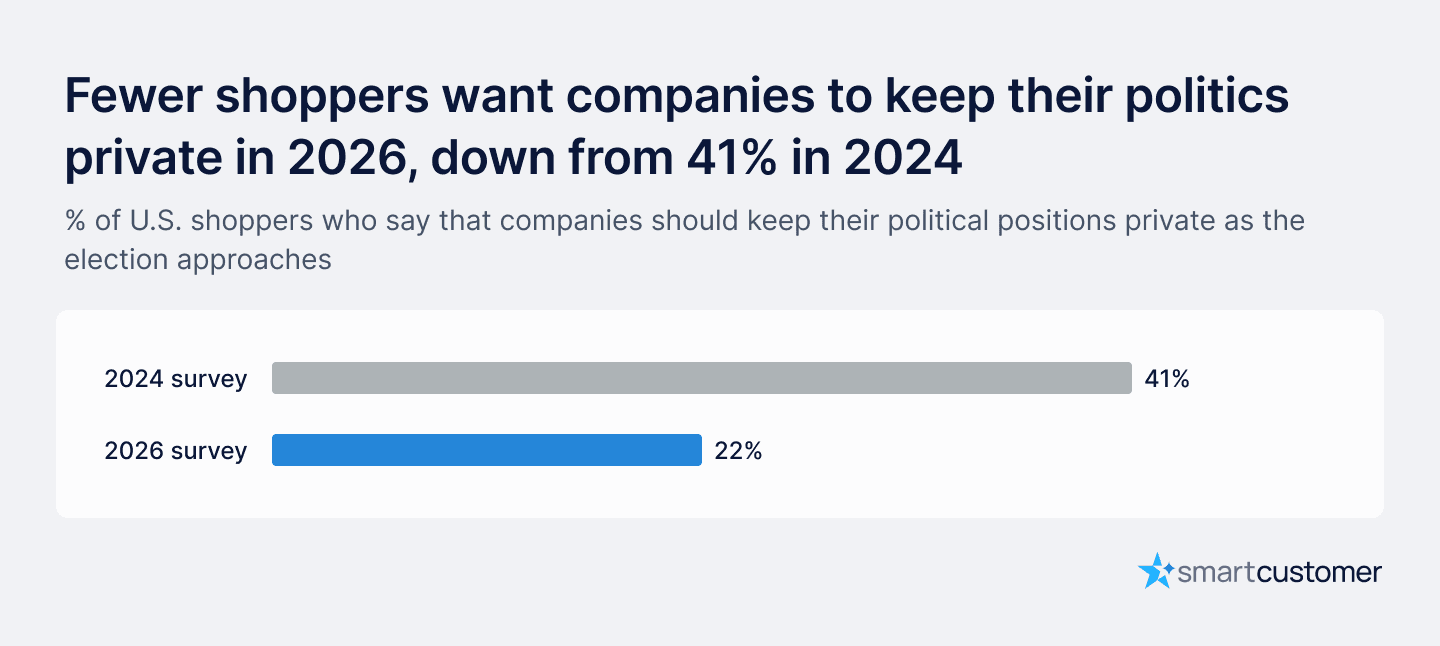
Fewer shoppers want this information kept private than two years ago. In 2026, only about one in five (22%) shoppers said companies should keep their political positions private, down from 41% in 2024.
Preferences vary by shoppers’ party lean. Shoppers who lean Republican are more likely to want companies’ political positions kept private (31%) than shoppers who lean Democratic (12%). About two-thirds of shoppers who lean Democratic (68%) want companies to be more open, compared with 46% of those who lean Republican.
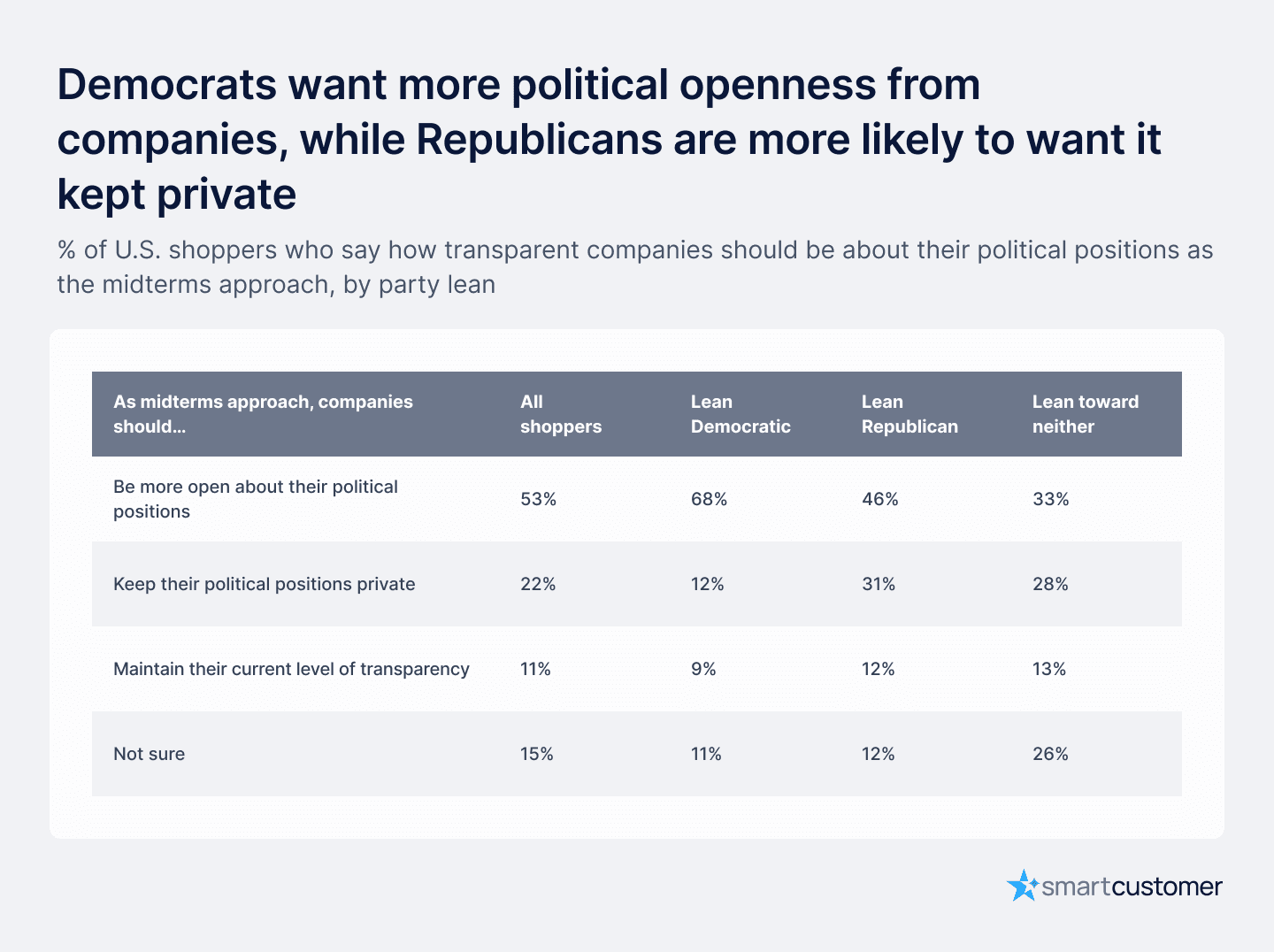 Figures are rounded to the nearest whole percent and may not add up to 100%.
Disclosure of a company’s political donations doesn’t automatically earn trust. If a company publicly disclosed all its political donations, about a third (35%) of shoppers responded that trust would depend upon who received the donations.
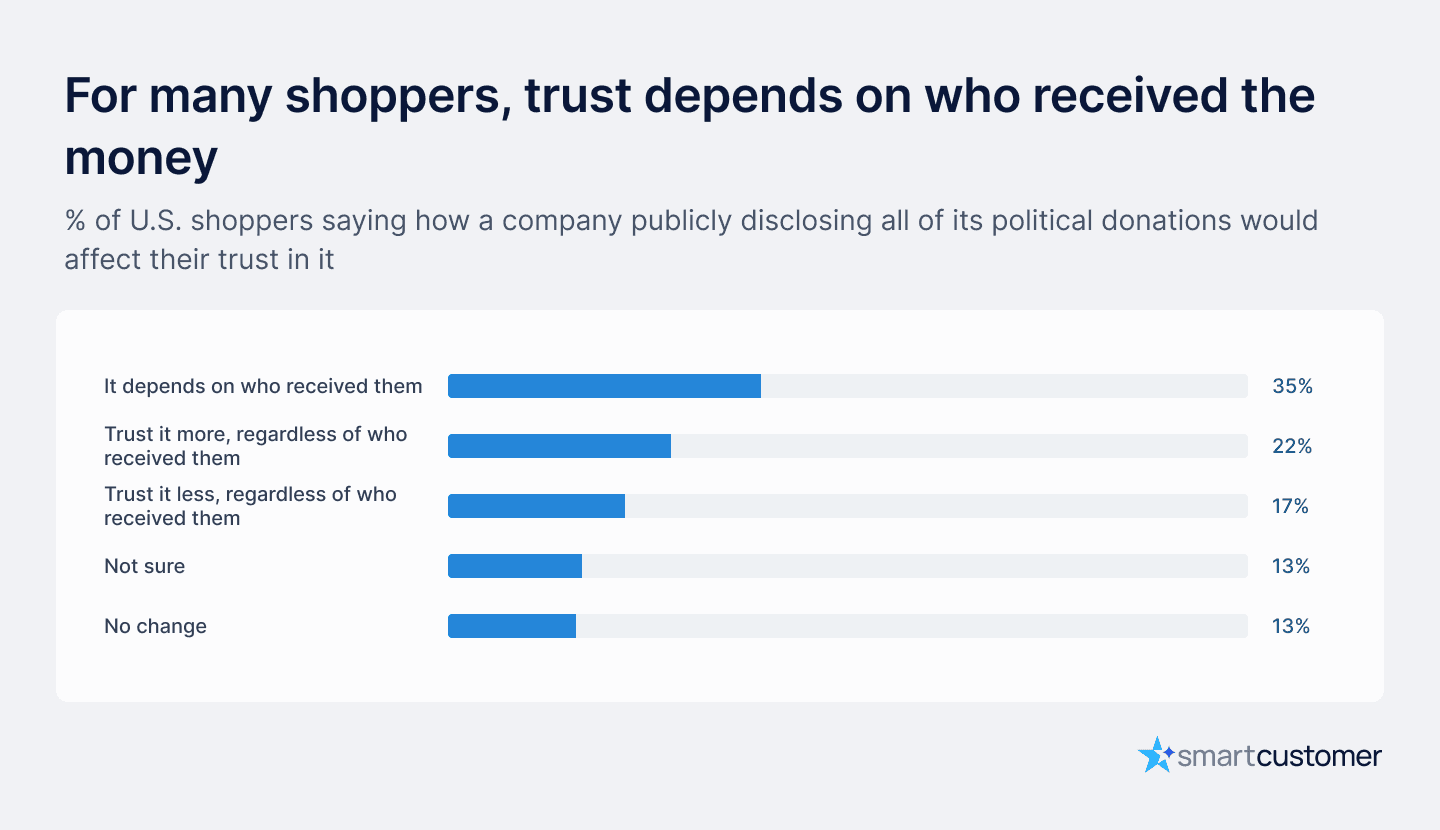
In other words, shoppers would trust businesses more if they supported the recipients and less if they didn’t. Only 22% of shoppers noted disclosure would make them trust the company more, regardless of who received the money.
4. Nearly four in ten shoppers plan to make more politically driven purchases ahead of the midterms
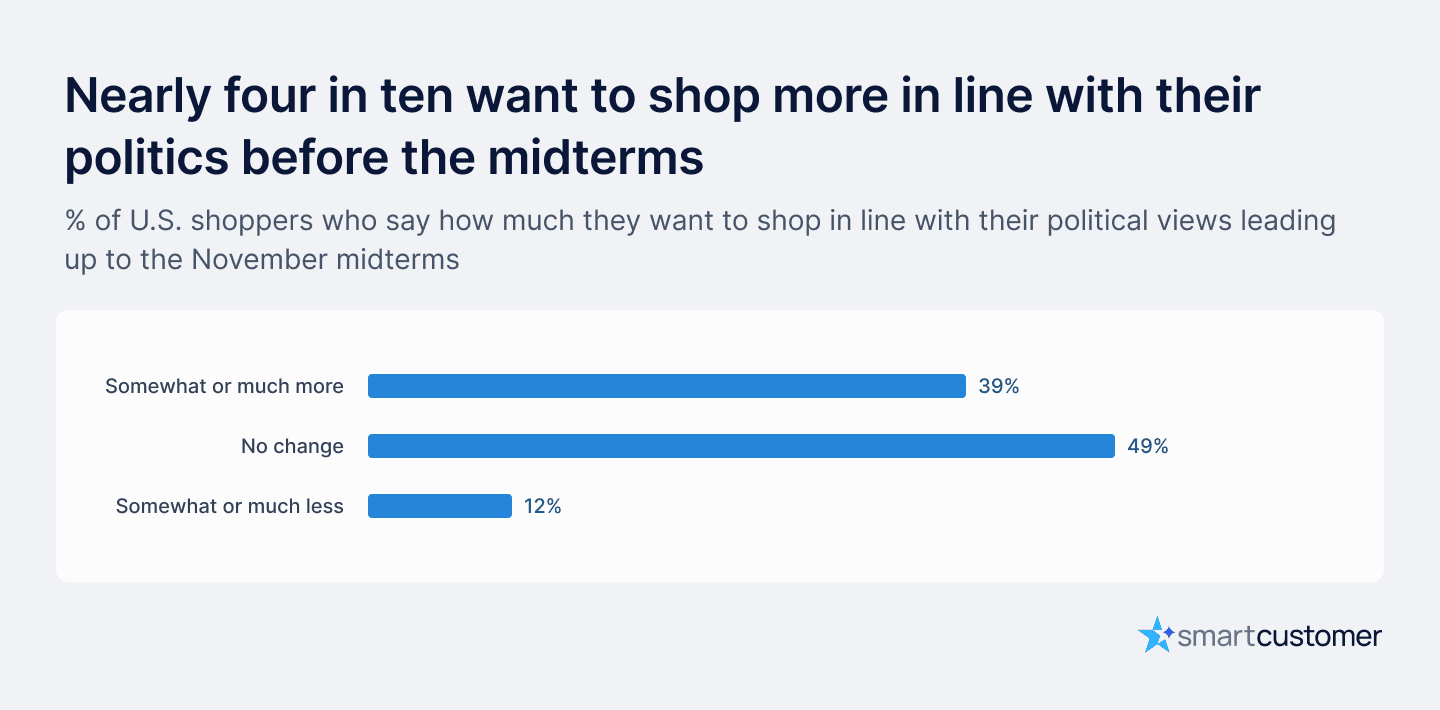
More than a third (39%) of shoppers said they planned to shop “somewhat more” or “much more” in line with their political views leading up to the November 2026 midterms. About half (49%) of the shoppers didn’t plan to change their shopping habits, and the remaining 12% planned to shop less in line with their politics.
The share rises to 45% among shoppers who say they plan to vote in November. Those shoppers were also more likely to have boycotted a company in the past year (57% compared to 21% of shoppers who don’t plan to vote or aren’t sure).
5. Visible political affiliations would change buying decisions
Nearly two-thirds of shoppers (60%) say that if they could easily see a business’s political affiliation while shopping, it would be more of a factor in their purchasing decisions. About a quarter (23%) say it would make no difference.
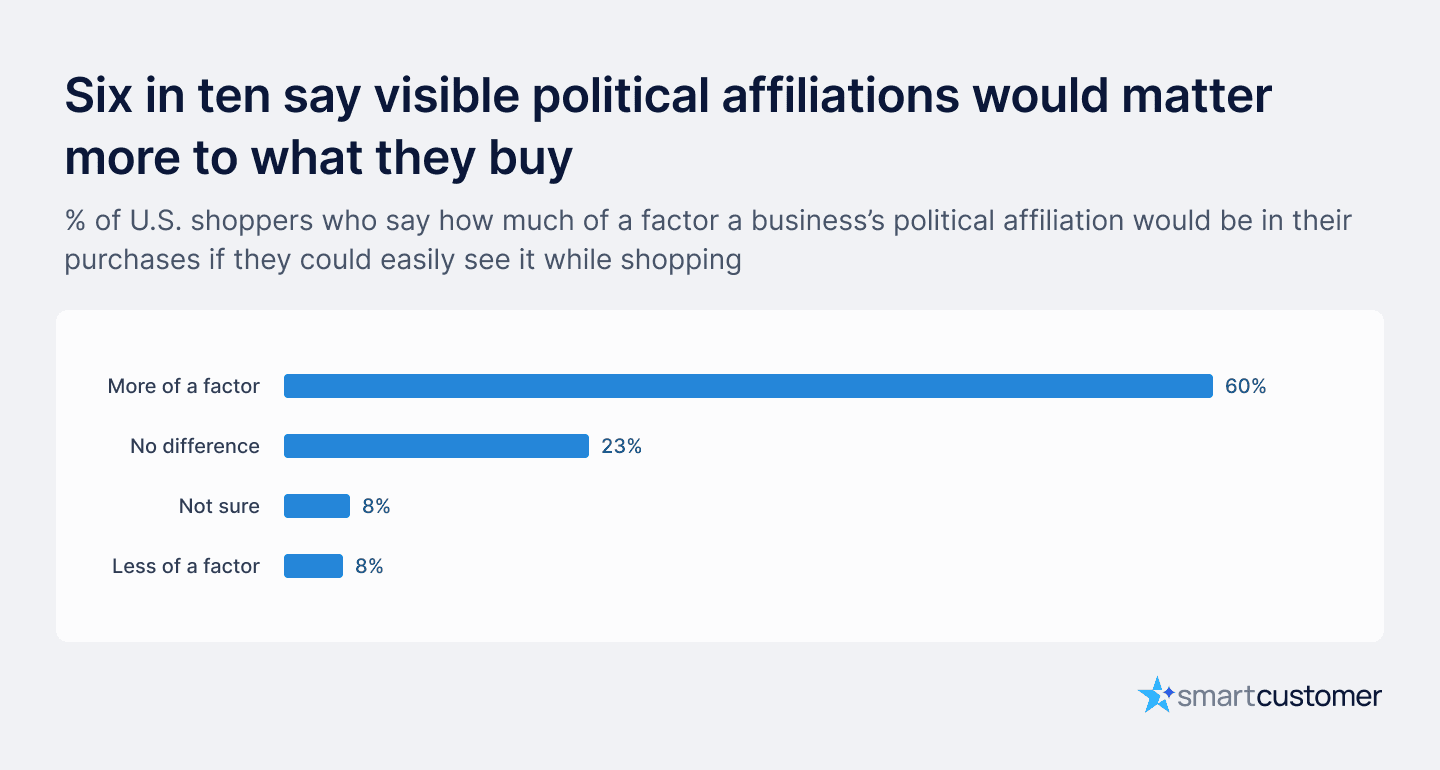
The share is higher among shoppers who lean toward a party. Nearly three-quarters (73%) of those who lean Democratic and 54% of those who lean Republican say that easily seeing a business’s political affiliation while shopping would influence their purchasing decisions, compared with 44% of those who lean toward neither.
6. Many shoppers have difficulty tracking companies’ political donations or aren’t aware that information is available
Nearly half (49%) of shoppers say it’s difficult to determine where a company’s political donations and lobbying money go or that it’s possible, but with some effort. More than a quarter (28%) of shoppers didn’t know it was available.
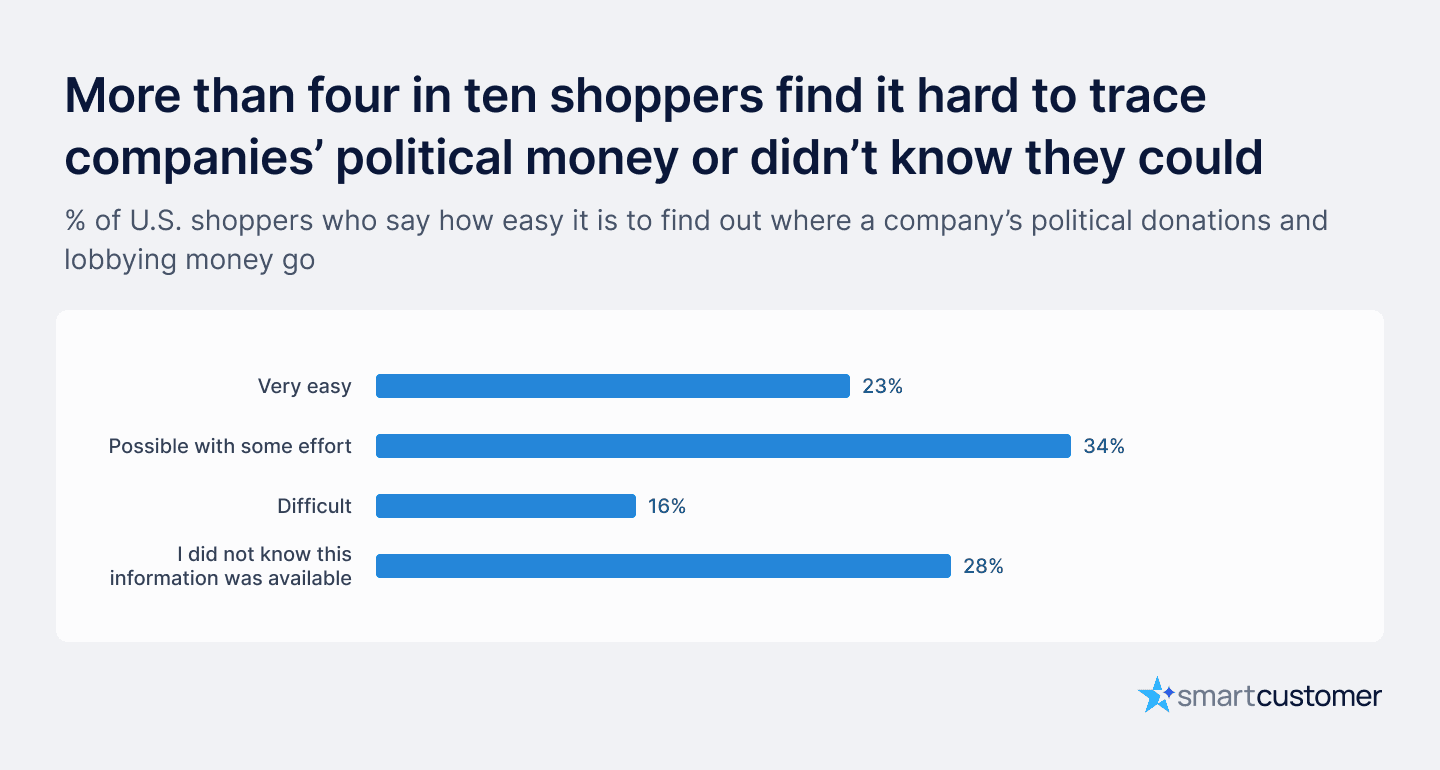 Figures are rounded to the nearest whole percent and may not add up to 100%.
“Shoppers are treating their purchases as a reflection of their values,” said Brian Potts, founder of Goods Unite Us. “People should have an accessible way to learn what their purchases support.”
7. Most shoppers would pay more for a politically-aligned product
Most shoppers would pay more for a product from a company that aligns with their beliefs. Nearly two-thirds (64%) of shoppers would pay more for one of two equal-quality products if it came from a company whose political beliefs matched their own, and 43% would pay at least 6% more.
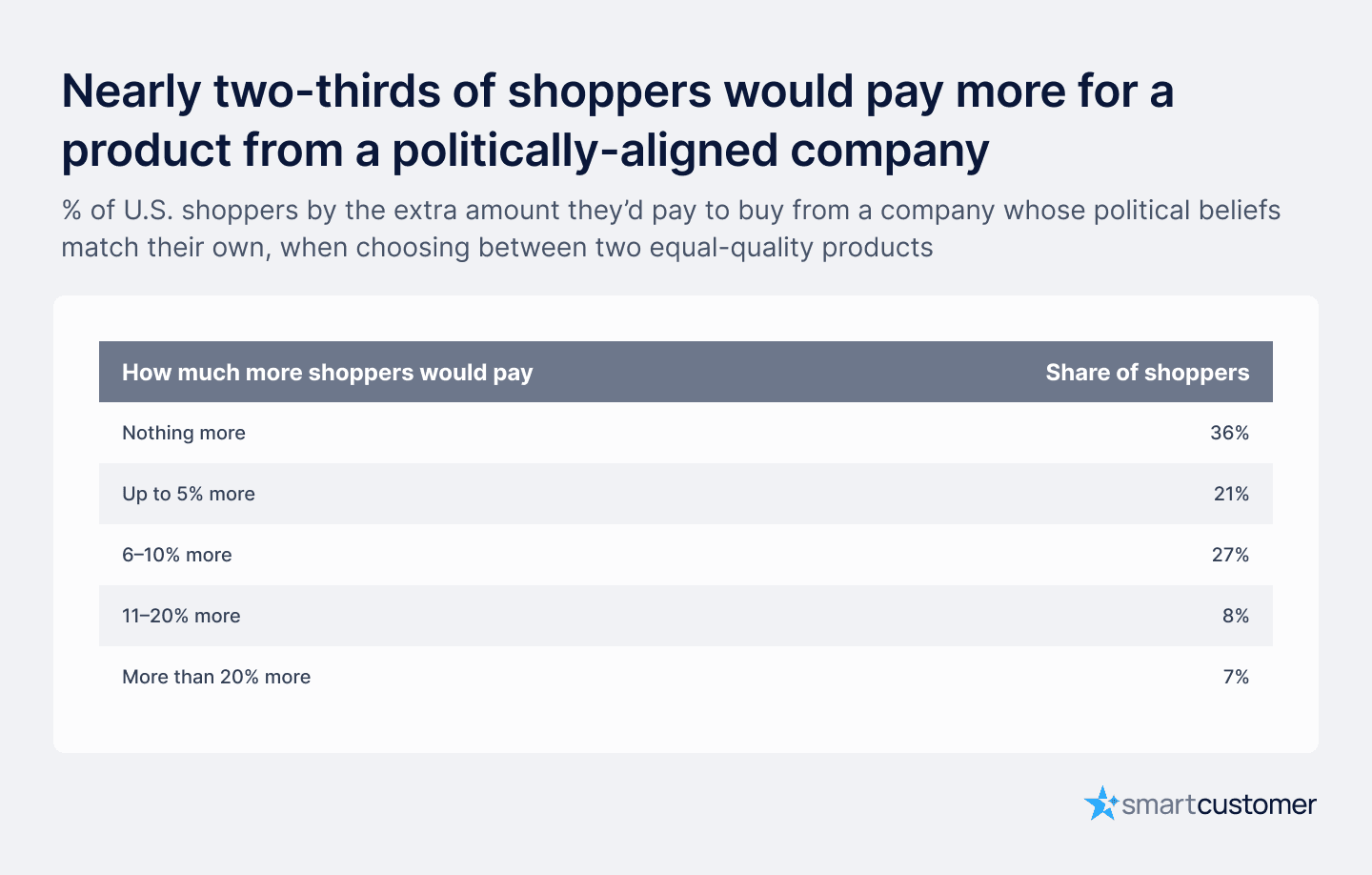 Figures are rounded to the nearest whole percent and may not add up to 100%.
8. More shoppers want companies to disclose political activity
Almost half (45%) of shoppers want companies to disclose their political donations and lobbying. That includes 26% who also want companies to speak out on political issues, and 19% who don’t need companies speaking out but still want that spending made public.
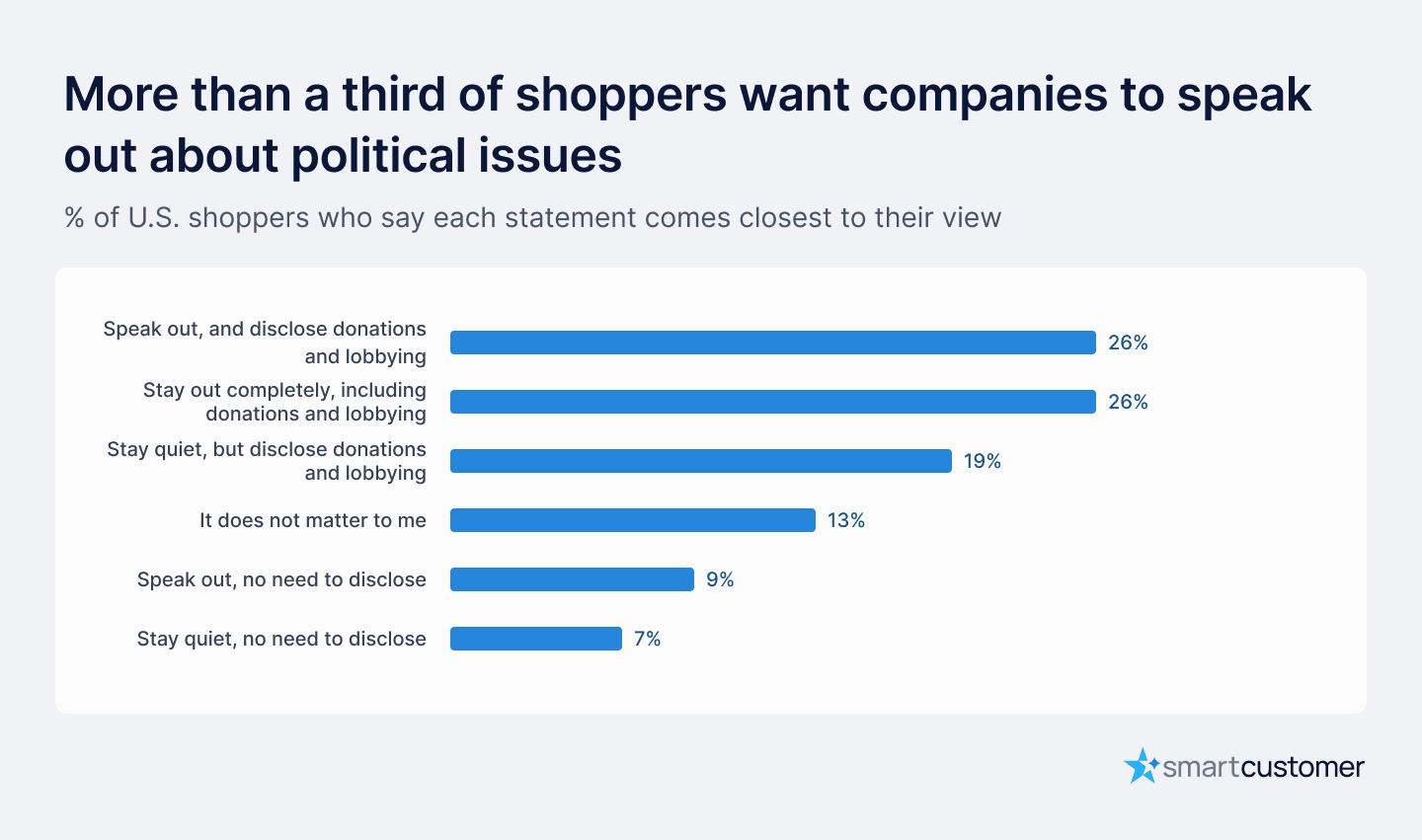 Figures are rounded to the nearest whole percent and may not add up to 100%.
About a quarter of shoppers (26%) want companies to stay out of political issues completely, including donations and lobbying. For a small percentage (13%) of shoppers, it doesn’t matter.
9. Companies’ positions on particular political issues can influence shopping decisions
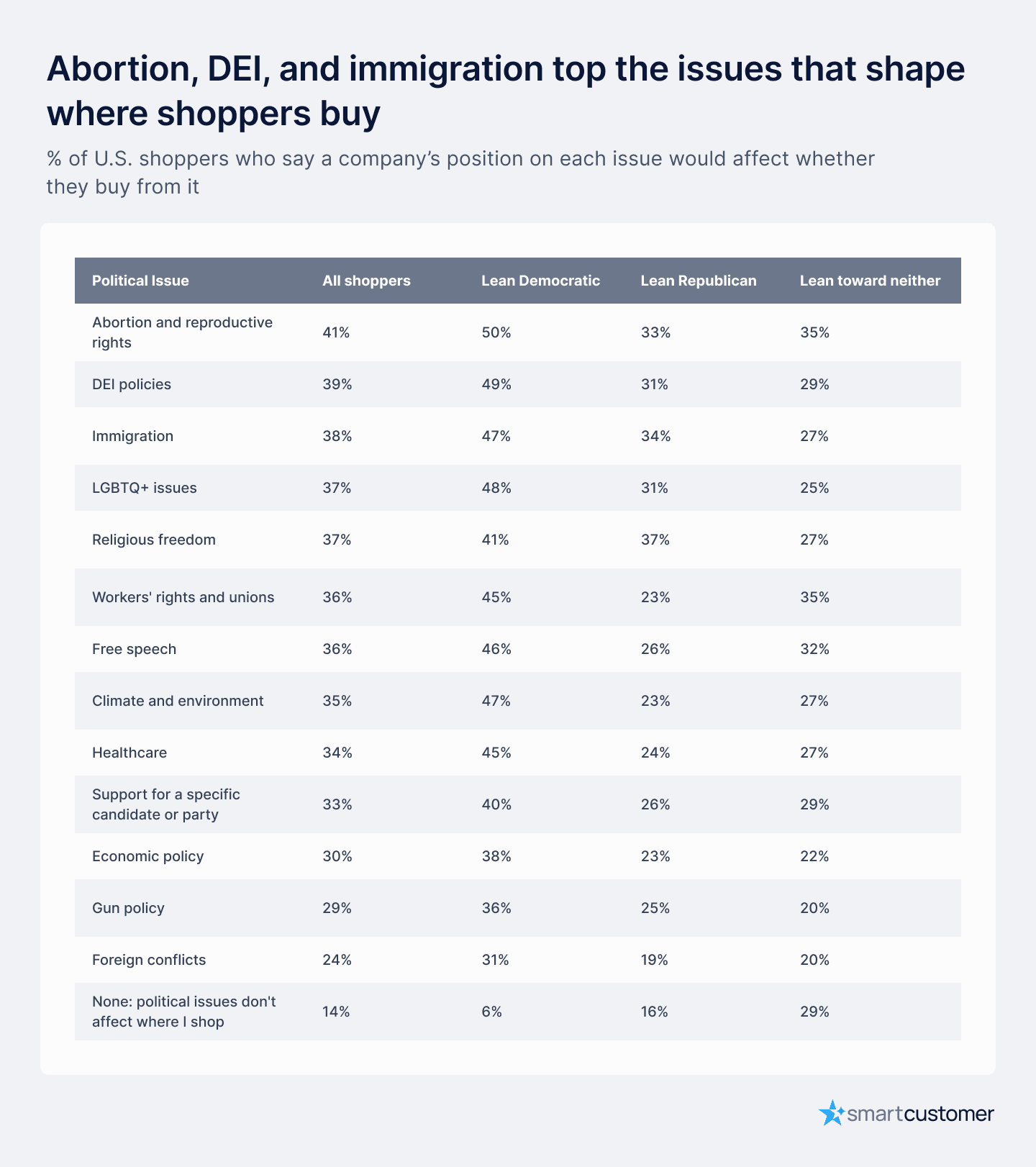
Shoppers selected every issue on which a company’s position would affect their purchasing decisions. Overall, abortion and reproductive rights ranked first at 41%, followed closely by DEI policies (39%) and immigration (38%).
For each of the 13 listed political issues, at least a fifth (20%) of the shoppers reported that it affected their purchasing decisions. Only a small percentage (14%) of shoppers said a company’s stance on political issues doesn’t affect where they shop.
The top issue differed by political leaning. The top issue for shoppers who lean Democratic was abortion and reproductive rights (50%), and the top issue for those who lean Republican was religious freedom (37%).
There were some commonalities in the top five issues for shoppers who lean Democratic and those who lean Republican. For example, regardless of political leaning, both shoppers ranked abortion and reproductive rights among their top five issues (50% of Democrats and 33% of Republicans), along with DEI policies (49% of Democrats and 31% of Republicans), LGBTQ+ issues (48% of Democrats and 31% of Republicans), and immigration (47% of Democrats and 34% of Republicans).
10. Political leanings, income, and age shape purchasing decisions
A company’s political position is more likely to affect the purchasing decisions of shoppers who lean toward a party than those who lean toward neither. For example, nearly two-thirds (64%) of those who lean Democratic and nearly half (47%) of those who lean Republican have boycotted a company for its political stance in the past 12 months, while less than a third (32%) of those who lean toward neither party have done so.
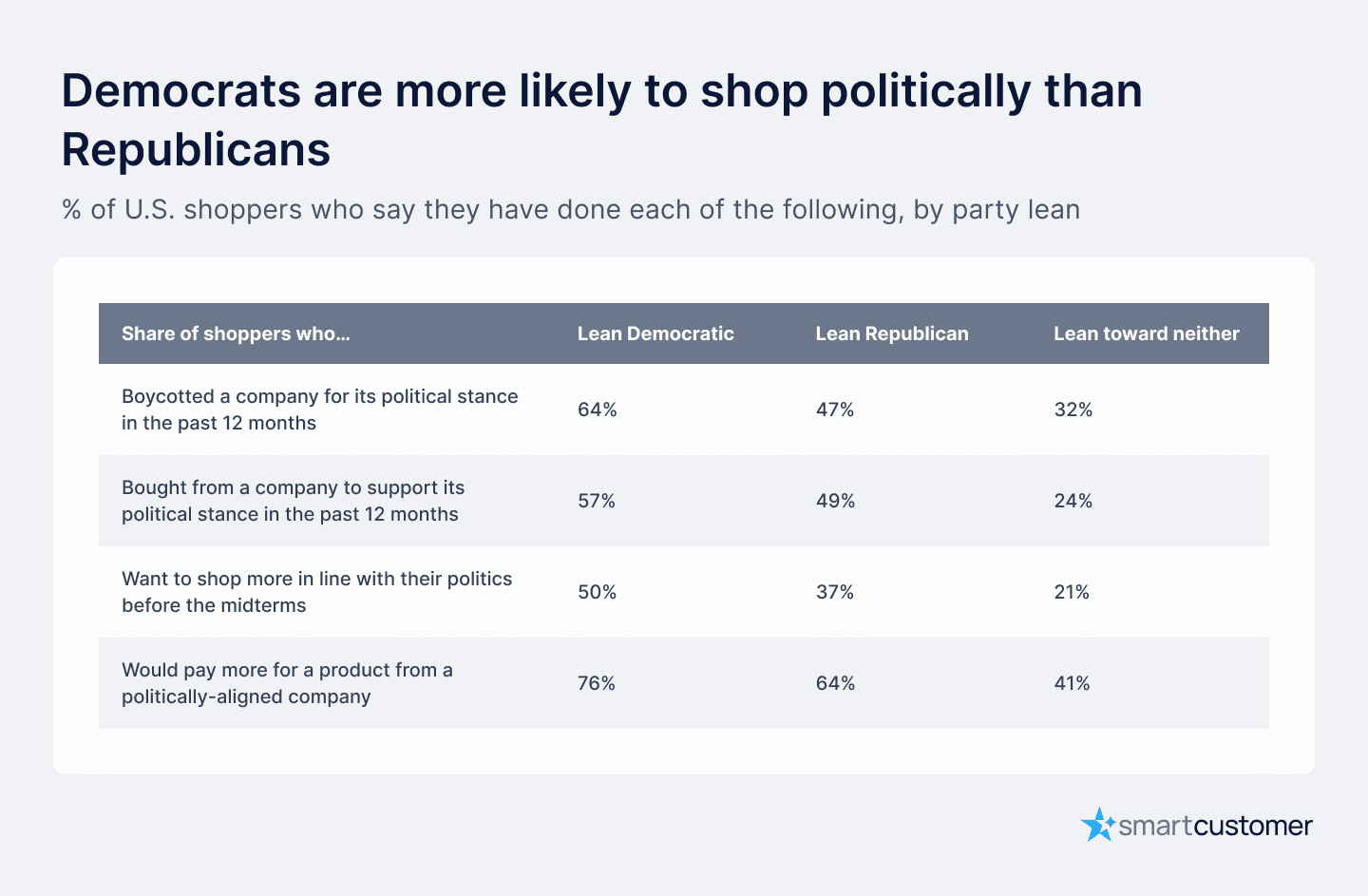
Boycotting increases with household income. Nearly two-thirds of shoppers (60%) in households earning $100,000 or more boycotted a company in the past year, compared with about a third (35%) in households earning under $50,000.
Shoppers’ age also plays a role in shopping habits. Shoppers over 60 are less likely to shop politically. Fewer than half (44%) boycotted a company or bought from one to support its stance, compared with nearly two-thirds (63%) of shoppers under 60.
Conclusion
Politics plays a meaningful role in how Americans shop, even more so than just two years ago. In an increasingly polarized landscape, shopping has transformed into an extension of civic expression. Whether by rewarding aligned brands or boycotting others, consumers are proving that where they spend their money can be just as intentional as how they cast their vote.
Methodology
This survey was conducted by SmartCustomer in partnership with Goods Unite Us. It was fielded online on October 7, 2026 through an online consumer panel among 1,115 U.S. adults aged 18 and over who shop at least every few weeks. The sample was balanced on age and gender at recruitment. Comparisons with 2024 refer to a SmartCustomer survey, published under the company’s former name Sitejabber, of 1,000 U.S. consumers aged 21 and over. The three questions compared used the same wording and answer options in both years.